Dr. I. J. Rülf
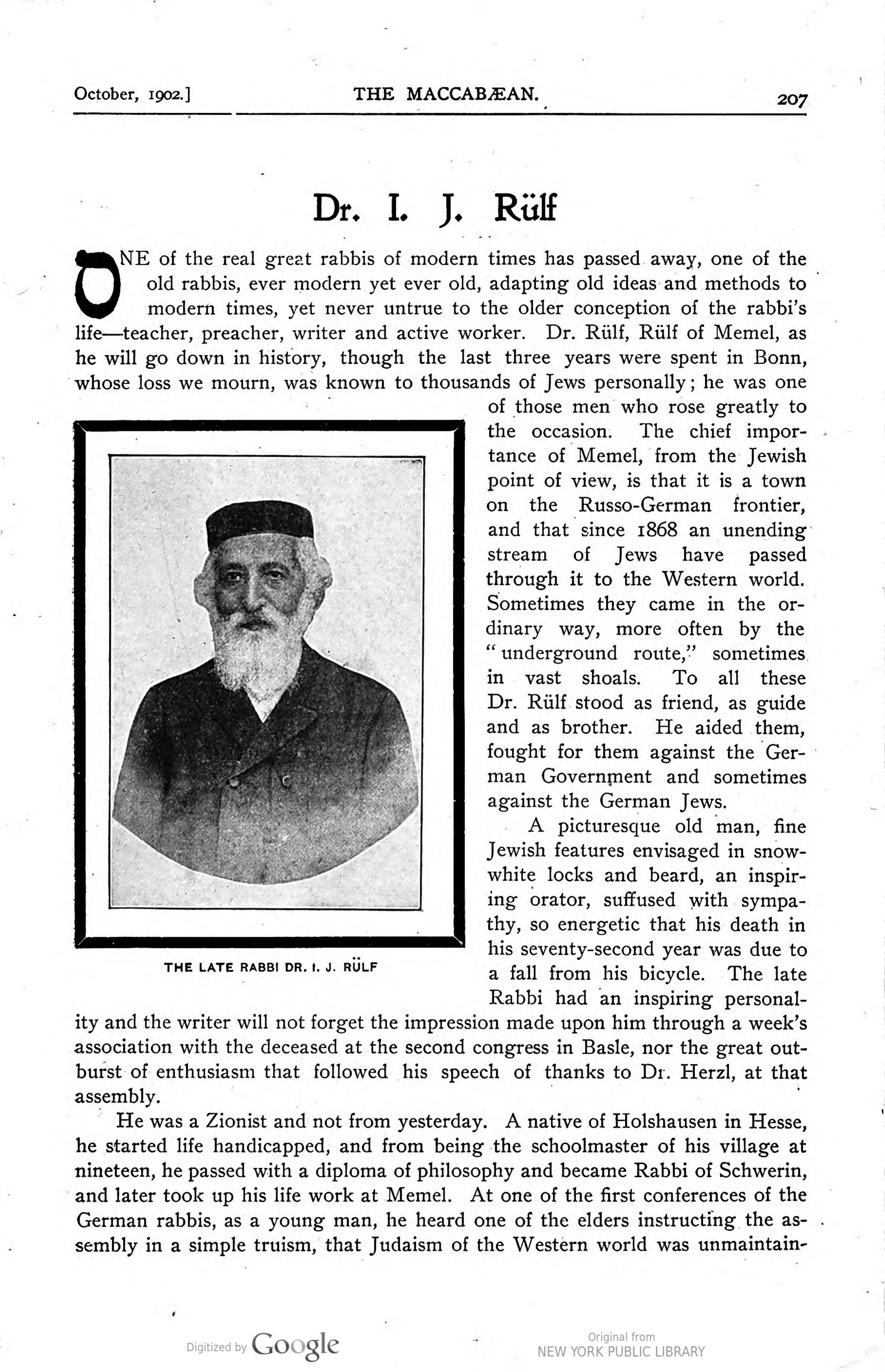
ONE of the real great rabbis of modern times has passed away, one of the old rabbis, ever modern yet ever old, adapting old ideas and methods to modern times, yet never untrue to the older conception of the rabbi's life—teacher, preacher, writer and active worker. Dr. Rülf, Rülf of Memel, as he will go down in history, though the last three years were spent in Bonn, whose loss we mourn, was known to thousands of Jews personally; he was one
of those men who rose greatly to the occasion. The chief importance of Memel, from the Jewish point of view, is that it is a town on the Russo-German frontier, and that since 1868 an unending stream of Jews have passed through it to the Western world. Sometimes they came in the ordinary way, more often by the “underground route,” sometimes in vast shoals. To all these Dr. Rülf stood as friend, as guide and as brother. He aided them, fought for them against the German Government and sometimes against the German Jews.
A picturesque old man, fine Jewish features envisaged in snowwhite locks and beard, an inspiring orator, suffused with sympathy, so energetic that his death in his seventy-second year was due to a fall from his bicycle. The late Rabbi had an inspiring personal-
ity and the writer will not forget the impression made upon him through a week's association with the deceased at the second congress in Basle, nor the great outburst of enthusiasm that followed his speech of thanks to Dr. Herzl, at that assembly.
He was a Zionist and not from yesterday. A native of Holshausen in Hesse, he started life handicapped, and from being the schoolmaster of his village at nineteen, he passed with a diploma of philosophy and became Rabbi of Schwerin, and later took up his life work at Memel. At one of the first conferences of the German rabbis, as a young man, he heard one of the elders instructing the assembly in a simple truism, that Judaism of the Western world was unmaintain-