Jewish Memorials in Rome
N an interesting book by Prof. Rodolfo Lanciani (New Tales of Old Rome, Houghton, Mifflin & Co., 1901), a chapter is devoted to an account of the Jewish memorials at Rome. The Jews first came into connection with the Romans in the time of the Maccabees when the treaty of alliance was signed. A curious monument of very doubtful authenticity was unearthed in 1876 in the church of S. Pietro in Vinculis, consisting of a fifth century sarcophagus divided into seven compartments, labeled: "In these seven divisions have been laid to rest the bones and ashes of the seven holy brothers of the Maccabees, of their father and mother, and of innumerable other saints." The labels date from the twelfth or thirteenth century. It is beyond the bounds of belief that the monument can be authentic, although it appears to have gained some credence, and is even treated as a possibility by Professor Lanciani. The high esteem which the Maccabees retained throughout the mediæval Catholic world is sufficient explanation for the ingenious fraud ; nevertheless it is worthy of record.
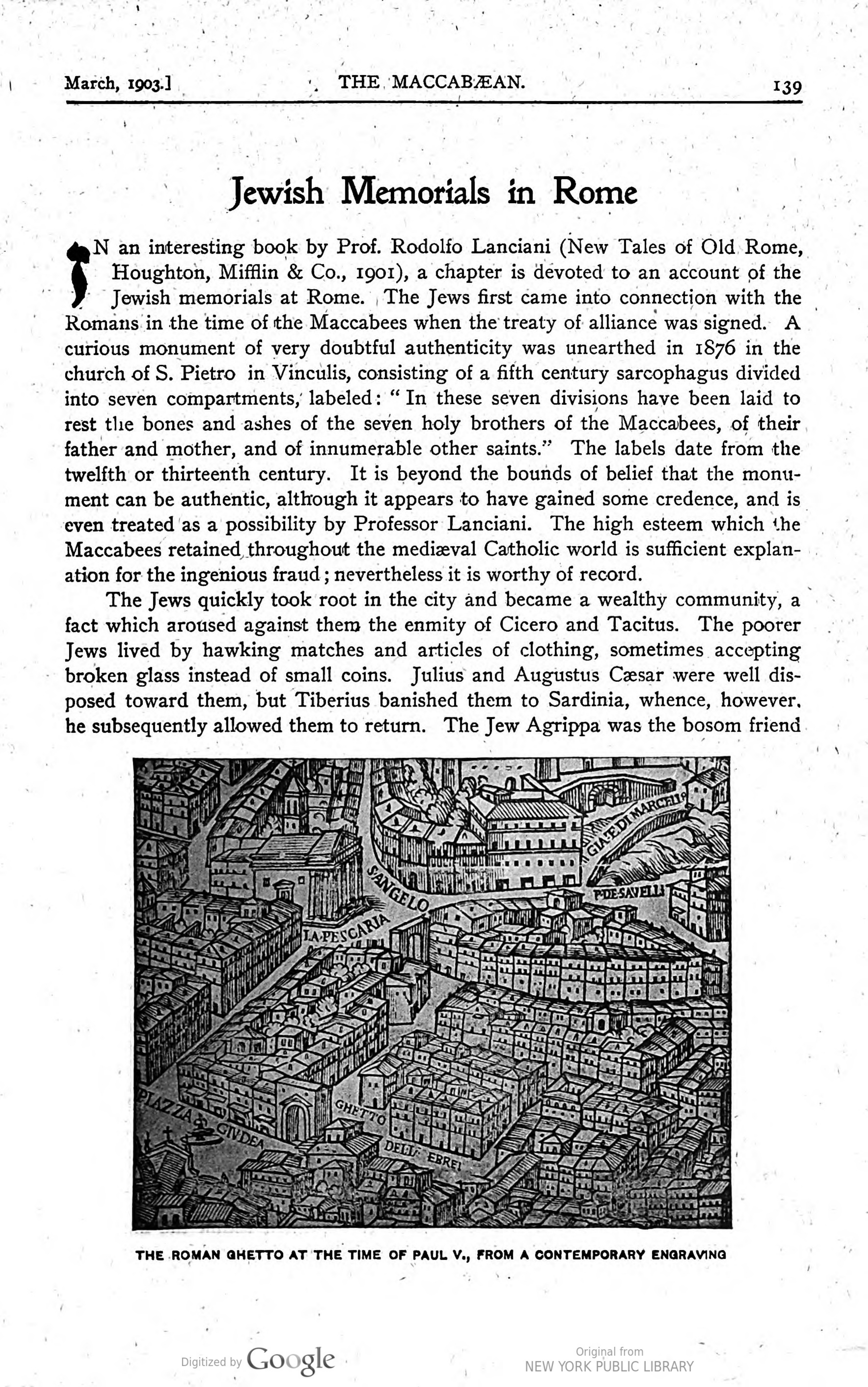
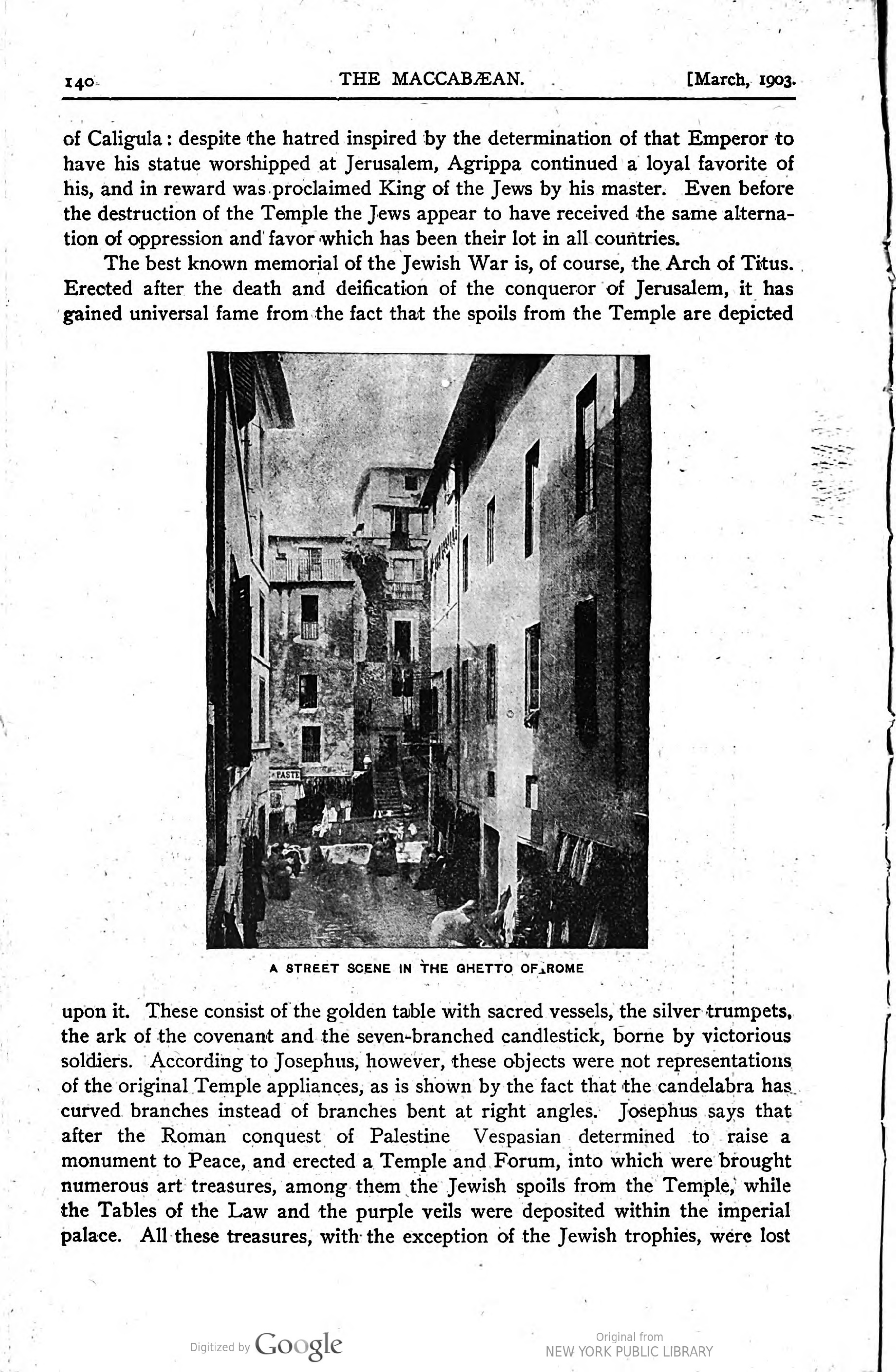
The Jews quickly took root in the city and became a wealthy community, a fact which aroused against them the enmity of Cicero and Tacitus. The poorer Jews lived by hawking matches and articles of clothing, sometimes accepting broken glass instead of small coins. Julius and Augustus Cæsar were well disposed toward them, but Tiberius banished them to Sardinia, whence, however, he subsequently allowed them to return. The Jew Agrippa was the bosom friend