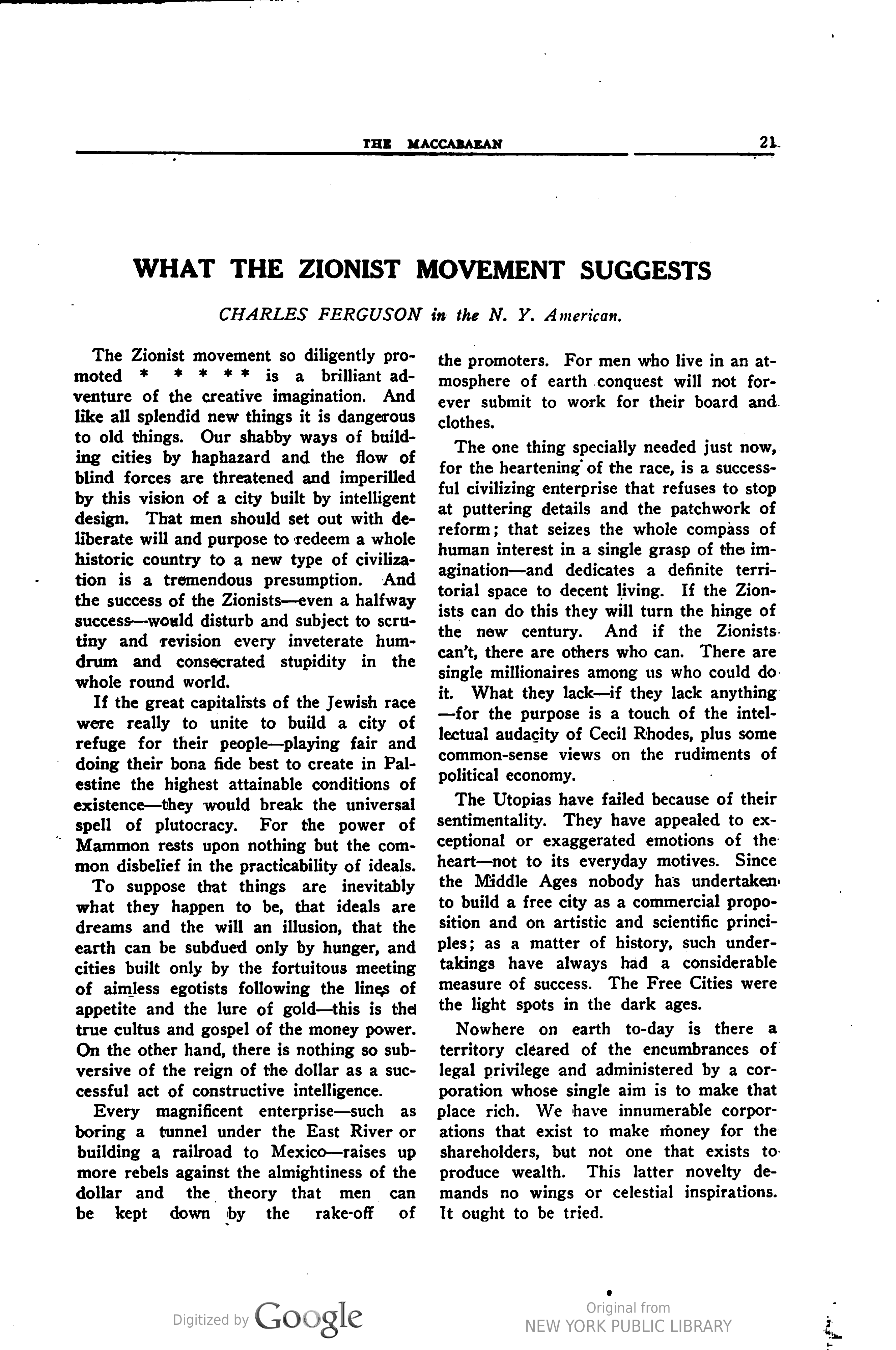
WHAT THE ZIONIST MOVEMENT SUGGESTS
The Zionist movement so diligently promoted * * * * is a brilliant adventure of the creative imagination. And like all splendid new things it is dangerous to old things. Our shabby ways of building cities by haphazard and the flow of blind forces are threatened and imperilled by this vision of a city built by intelligent design. That men should set out with deliberate will and purpose to redeem a whole historic country to a new type of civilization is a tremendous presumption. And the success of the Zionists—even a halfway success—would disturb and subject to scrutiny and revision every inveterate humdrum and consecrated stupidity in the whole round world.
If the great capitalists of the Jewish race were really to unite to build a city of refuge for their people—playing fair and doing their bona fide best to create in Palestine the highest attainable conditions of existence—they would break the universal spell of plutocracy. For the power of Mammon rests upon nothing but the common disbelief in the practicability of ideals.
To suppose that things are inevitably what they happen to be, that ideals are dreams and the will an illusion, that the earth can be subdued only by hunger, and cities built only by the fortuitous meeting of aimless egotists following the lines of appetite and the lure of gold—this is the true cultus and gospel of the money power. On the other hand, there is nothing so subversive of the reign of the dollar as a successful act of constructive intelligence.
Every magnificent enterprise—such as boring a tunnel under the East River or building a railroad to Mexico—raises up more rebels against the almightiness of the dollar and the theory that men can be kept down by the rake-off of
the promoters. For men who live in an atmosphere of earth conquest will not forever submit to work for their board and clothes.
The one thing specially needed just now, for the heartening of the race, is a successful civilizing enterprise that refuses to stop at puttering details and the patchwork of reform; that seizes the whole compass of human interest in a single grasp of the imagination—and dedicates a definite territorial space to decent living. If the Zionists can do this they will turn the hinge of the new century. And if the Zionists can't, there are others who can. There are single millionaires among us who could do it. What they lack—if they lack anything—for the purpose is a touch of the intellectual audacity of Cecil Rhodes, plus some common-sense views on the rudiments of political economy.
The Utopias have failed because of their sentimentality. They have appealed to exceptional or exaggerated emotions of the heart—not to its everyday motives. Since the Middle Ages nobody has undertaken to build a free city as a commercial proposition and on artistic and scientific principles; as a matter of history, such undertakings have always had a considerable measure of success. The Free Cities were the light spots in the dark ages.
Nowhere on earth to-day is there a territory cleared of the encumbrances of legal privilege and administered by a corporation whose single aim is to make that place rich. We have innumerable corporations that exist to make money for the shareholders, but not one that exists to produce wealth. This latter novelty demands no wings or celestial inspirations. It ought to be tried.