THE ZIONIST LITERATURE
THE picture of the Hebrew Utopia, or Zionistic State, was the work of idealists who kept ever clearly in mind the thought of building up in Canaan, as we have seen in a previous paper, a new commonwealth. Though as a vision, theirs must have seemed to many hardly to be realizable, it held the old homeland of the goluth in a fascinating way before them. From Canaan, indeed, the tenderly winsome and alluring appeals appear to have gone forth to distant lands. Though there is an imperialistic note about these appeals, though: they pictured the whole earth and all its peoples as destined to come under the sceptre of Israel, they ever thought of the land of Canaan as the home of Yahveh's own. The land which he, as they believed, had given their fathers was to be the favored land in the new day; and as the home of the goluth was to draw to itself the riches, and secure the allegiance of all peoples.
But such a land must have its center and its civil and industrial, social and religious life must be shaped and controlled from this center. The Deuteronomists in laboring for their great ends
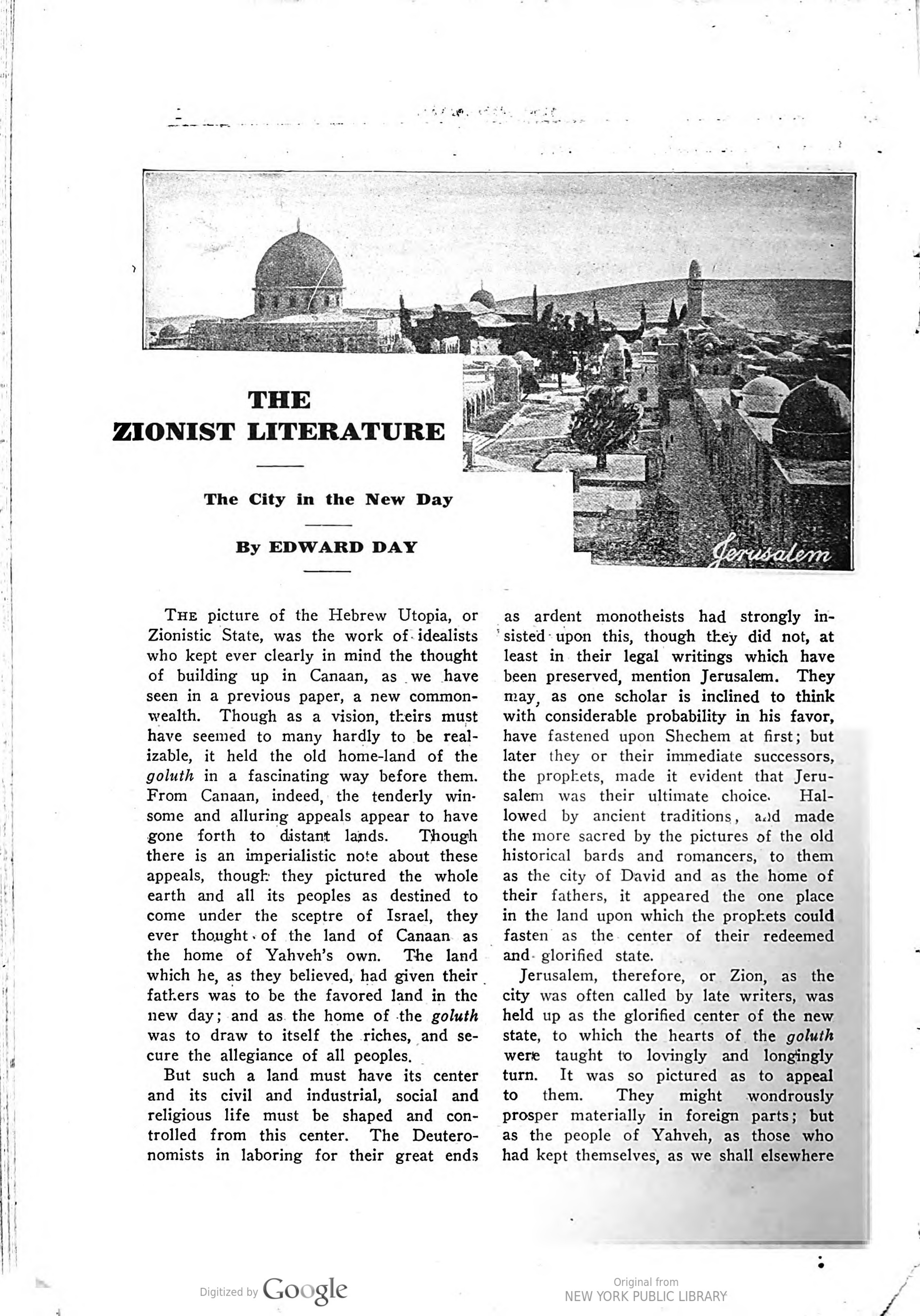
as ardent monotheists had strongly insisted upon this, though they did not, at least in their legal writings which have been preserved, mention Jerusalem. They may, as one scholar is inclined to think with considerable probability in his favor, have fastened upon Shechem at first; but later they or their immediate successors, the prophets, made it evident that Jerusalem was their ultimate choice. Hallowed by ancient traditions, and made the more sacred by the pictures of the old historical bards and romancers, to them as the city of David and as the home of their fathers, it appeared the one place in the land upon which the prophets could fasten as the center of their redeemed and glorified state.
Jerusalem, therefore, or Zion, as the city was often called by late writers, was held up as the glorified center of the new state, to which the hearts of the goluth were taught to lovingly and longingly turn. It was so pictured as to appeal to them. They might wondrously prosper materially in foreign parts; but as the people of Yahveh, as those who had kept themselves, as we shall elsewhere