Ibrahim Mikhaiyel (From Life in the Palestinian Colonies)
Muamed is old. He had turned his seventieth birthday the last Ramasan, and he has one eye dull of vision and covered with a white film.
There is nothing he may call his own. For could such things as a rotten abaja, one linen shirt, white but for the spots on it, an earthen jar, a club and an ancient domestic revolver striking but five paces off, a pipe, a reed flute which he masters wondrously, be called possessions?
Neither has he a wife, nor did he ever have one. Not all are destined to marry, for a wife is such a luxury —the least of them costs from ten to fifteen Napoleons. And so Muamed is doomed to pass the rest of his life alone.
Years ago he had hired out to work in the orange groves of the rich, digging pits for the orange plant, watering it, hewing stones, and so on; he was "Muker," drove the cattle to pasture, and was water carrier, too— but upon the approach of old age, he grew useless.
If it were not for the newcomers who had settled on a strip of land they had bought from the Sultan, three miles from Bnai-Brak, his village, his would have been a sorry lot, indeed.
Translated from the Russians by Frieda Schapiro.
In his village they are reported to be Jahuda-Mascohi, who mean to settle in this land forever and have come to take all the land, the very land of their forefathers away from the Fellahs.— And the village was agog with terror and anger about these rumors.
This excitement left Muamed unperturbed, for he himself was much satisfied with these strangers.
They have taken him to their very hearts and entrusted him with the care of their cattle.
They were far from rich, judging by the number of cattle; five to six cows, as many horses, two mules, one camel, one dozen lambs and three goats.
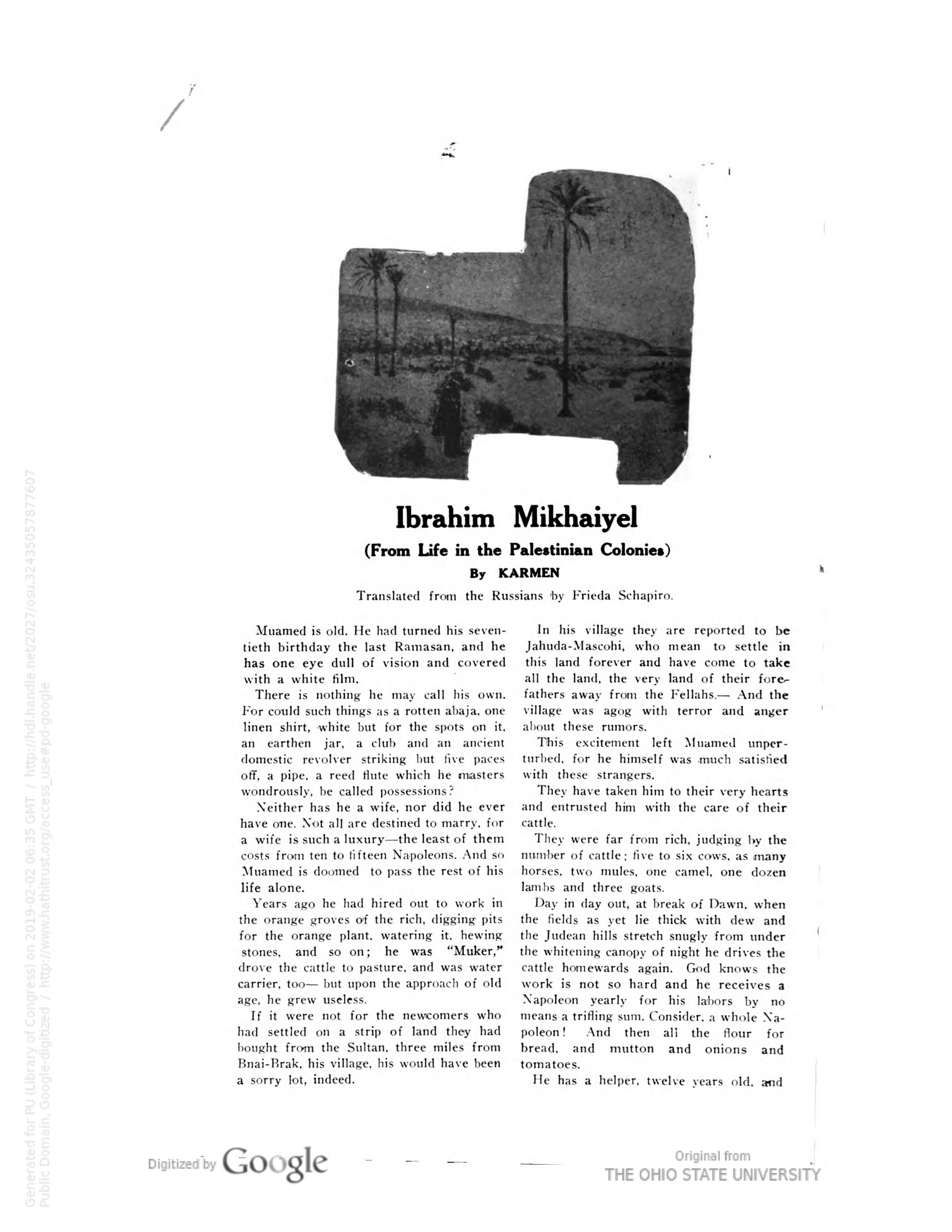
Day in day out, at break of Dawn, when the fields as yet lie thick with dew and the Judean hills stretch snugly from under the whitening canopy of night he drives the cattle homewards again. God knows the work is not so hard and he receives a Napoleon yearly for his labors by no means a trifling sum. Consider, a whole Napoleon! And then all the flour for bread, and mutton and onions and tomatoes.
He has a helper, twelve years old, and