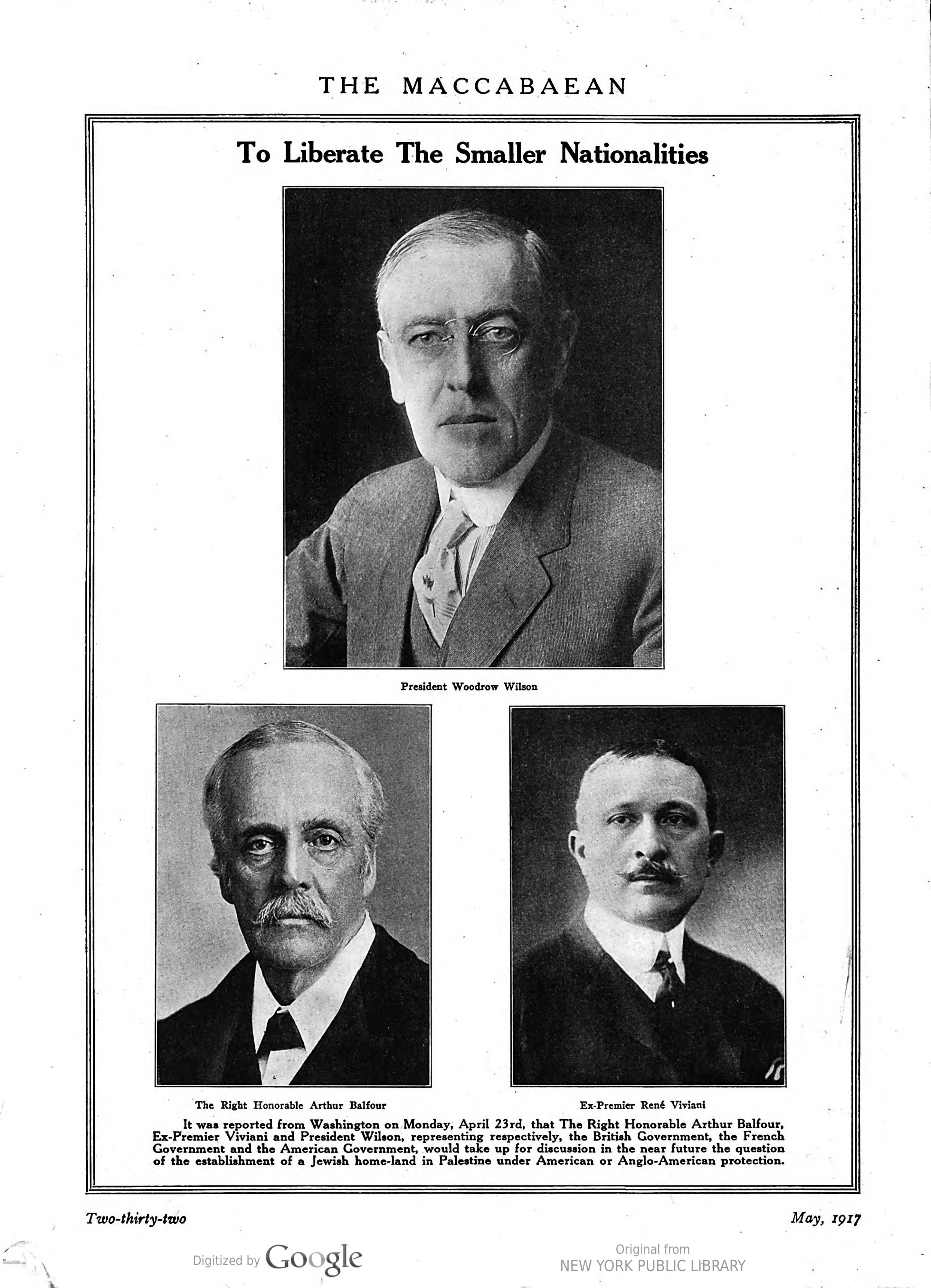
Jewish Factions in Russia
At last, for the first time in history, there are Jewish parties in Russia, officially recognized as such. Until the recent colossal upheaval not a single political organization of Jews in Russia had been sanctioned by the government. The old Russian régime simplified its tasks greatly by ruling instead of governing. It recognized a single principle: that which does not further my ends is forbidden. Only those parties furthering reactionary tendencies were allowed to exist.
For this reason, there was no country in the world where the existence of “underground” political parties was so common. All parties in Russia that did not have as their program the partial or complete support of the autocratic system were “illegal” and “underground.” ‘There was no difference between the time of the October Manifesto of 1905, and the succeeding period, except that previously the Russian government had officially forbidden the formation of any political party whatsoever, even though it were loyal to the government, whereas since 1906 it tolerated, as it were, the political organization of those parties which it needed.
Those who have had no first-hand knowledge of the situation in Russia cannot conceive of the intense spiritual suffering the Russian Jews underwent in consequence of the fact that with their highly developed political requirements, they were totally unable to organize on the basis of certain ideals, and to disseminate their theories.
Of course there are among the Russian Jews certain elements that would have desired to give their support to the autocratic régime years ago. The former Russian government would not only have countenanced but actually fostered such organizations. Fortunately, however, these Jews did not dare to carry into effect the reactionary sentiments to which they often gave expression in restricted circles. For the Jewish people, oppressed and persecuted as they were, forbade them to enter on that field of politics which would have brought them even into indirect contact with the anti-Semitic parties. _
When, in the winter of 1906, a number of influential Jews wished to join forces in order to secure an audience with the Czar, and to assure him in the name of the Jewish masses of their unconditional loyalty and conservative sentiments, a tempest of indignation swept over the Jewish Pale. Outraged pride and anger cried to these self-appointed representatives that it would be unworthy of the Jews to approach a Czar who had defiled himself with the blood of Pogroms. In this way all attempts of that period to form Octobrist Jewish groups came to naught and were destroyed in their very inception, thanks to the opposition of the Jewish masses.
The foundation of all other Jewish parties was gradually halted by the violent measures of the Russian government. If, despite these measures, the remnants of Jewish political organization were visible in recent times, this fact was a great marvel, and the result of an invincible will. For, no matter to what party one belonged, there was a perpetual menace of prison or Siberia. Finally it came about that those parties which had continued to exist grouped themselves wholly about certain publications. The four
Jewish organs in the Russian tongue at the end of 1916 represented the Zionist Organization, the Bundists, the so-called Popular Group (Vinaver, Sliosberg and associates), and finally a combination of the National Popular Party (Dubnow and associates) and the Democratic Group (Bramson and associates). The Zionist Popular Party had the largest circulation, with 16,000 subscribers. Despite numberless obstacles, it combined a strictly Zionist demands of the country, and upheld the interests of the Jewish people with laudable courage and earnestness during the time of war. Although the Zionist organ, headed by the Basle platform, could not be suppressed (forbidden in Petrograd at the Moscow), every adherent of the Zionist Organization was violently persecuted. The Zionist Fund Stamps, etc.) was subject to imprisonment. At the beginning of the world war, there were 100 cases of partisans of the Zionist Organization awaiting sentence, cases in which individuals or whole Zionist groups were concerned. Even more brutal was the Russian government to popularize the Jewish parties by Workingmen's Association, the Poalei Zion, and similar groups. Nowhere in the world was such a repulsive display of oppression to be found. Thus it was that at the moment when the Revolution broke out there was no real mass organization among the Jews, and even their strongest parties had preserved little more than their central representative bodies.
II.
There was, however, an intermediary period, in which the Jewish political groups possessed somewhat more freedom of action, or rather temporarily demolished all obstacles in their path with an unequalled capacity for self-sacrifice. This was the stormy year 1905-1906, remarkable for its idealistic aspirations, when parties sprang up among the Jews like mushrooms. At that time, when, after the bloody events of the days of October, the whole Russian-Jewish Ghetto seemed like a tremendous and bewildering arena, all those who had long previously expressed their opinions on Jewry, politics, and social questions, banded themselves together. As a result of those spiritual conflicts, which had up to that time been waged in conventicles or outside the Russian boundaries, new organizations of kindred spirits came into being over night, as it were.
With a veritable sword of Damocles (the imminent prospect of renewed Pogroms) hanging over its head, the vigor of the Jewish spirit manifested itself at that time with extraordinary power. Side by side with the flight of the panic-stricken masses, a frenzied and heroic struggle for the sake of the ideal! The Jewish temperament cast problems and yet more problems into the gloom of every-day matters and thus enhanced the value of life and death. The spontaneous debating club, so to speak, which grew up in the winter of 1905-1906, reaching from Riga to Odessa, and from Warsaw to Ekaterinoslav, and which boasted branches in many isolated communities, was no mere forum for idle chatter in spite of lurking dangers and