Italian and Jewish Nationalism
HISTORICAL parallels are at best dangerous and not to be pressed too closely. Yet, since the human material, from whose reactions to circumstance history is made, does not differ essentially in spite of outward manifestations of seemingly great variation, history does repeat itself. What one nation has done another
nation may be expected to do. The difficulties facing the establishment of the Jewish State are in many instances paralleled by the difficulties that faced the Italian State. Both were national movements striving to realize age-long aspirations for unity of a people, for liberty to develop national characteristics free from foreign influence, to re-establish the influence and prestige of two ancient and holy cities, to make available for secular use a language sacred because of its ancient origin, historical associations and literary use, to elevate a people by stimu-
lating in them a consciousness of the nobility of their heritage and to achieve through practical politics what had long been considered a purely ideal problem. It is true the people of Italy were already assembled on the soil and devoted to it. There was no question of providing a population, but Italy before her union was in no sense a nation. The eight different states that made up the Italian peninsula were disunited in every sense. They had no common language. The goatherds of the South could not understand or be understood by the silk-workers of the North. Except for literary purposes among the educated classes, Italian was almost a foreign language. The dialects of the various provinces were used almost exclusively to express popular and intimate things. Italian children are still obliged to spend a great deal of time in learning Italian. This difficulty the Italian Government attempted at once to rectify by the establishment of elementary schools which, while giving due recognition to the necessity of preserving the charm of the local dialects and their treasury of folk-song and folk-poetry, still impressed upon the new generation the need in the reconstruction of a people for one language standardized, classicized and ennobled by a lofty literary tradition. Through language comes unity of
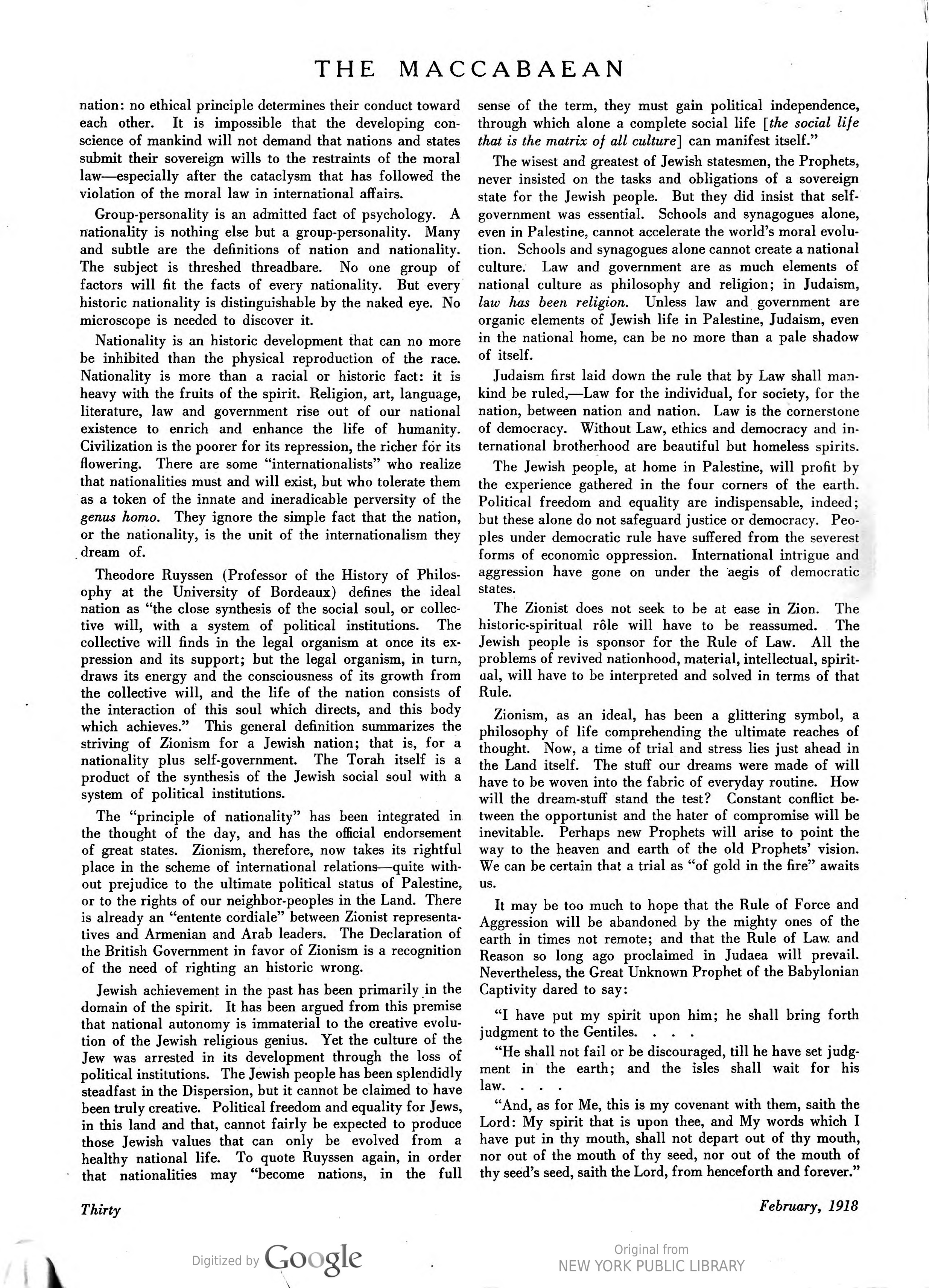
thought, through unity of language comes unity of aspiration. The poets of the Risorgimento period conceived nobly of their part in the struggle for unity and we have the testimony of no less a man of action than Garibaldi himself as to the service rendered by the poets in the work of exhortation and the preservation of national ideals before
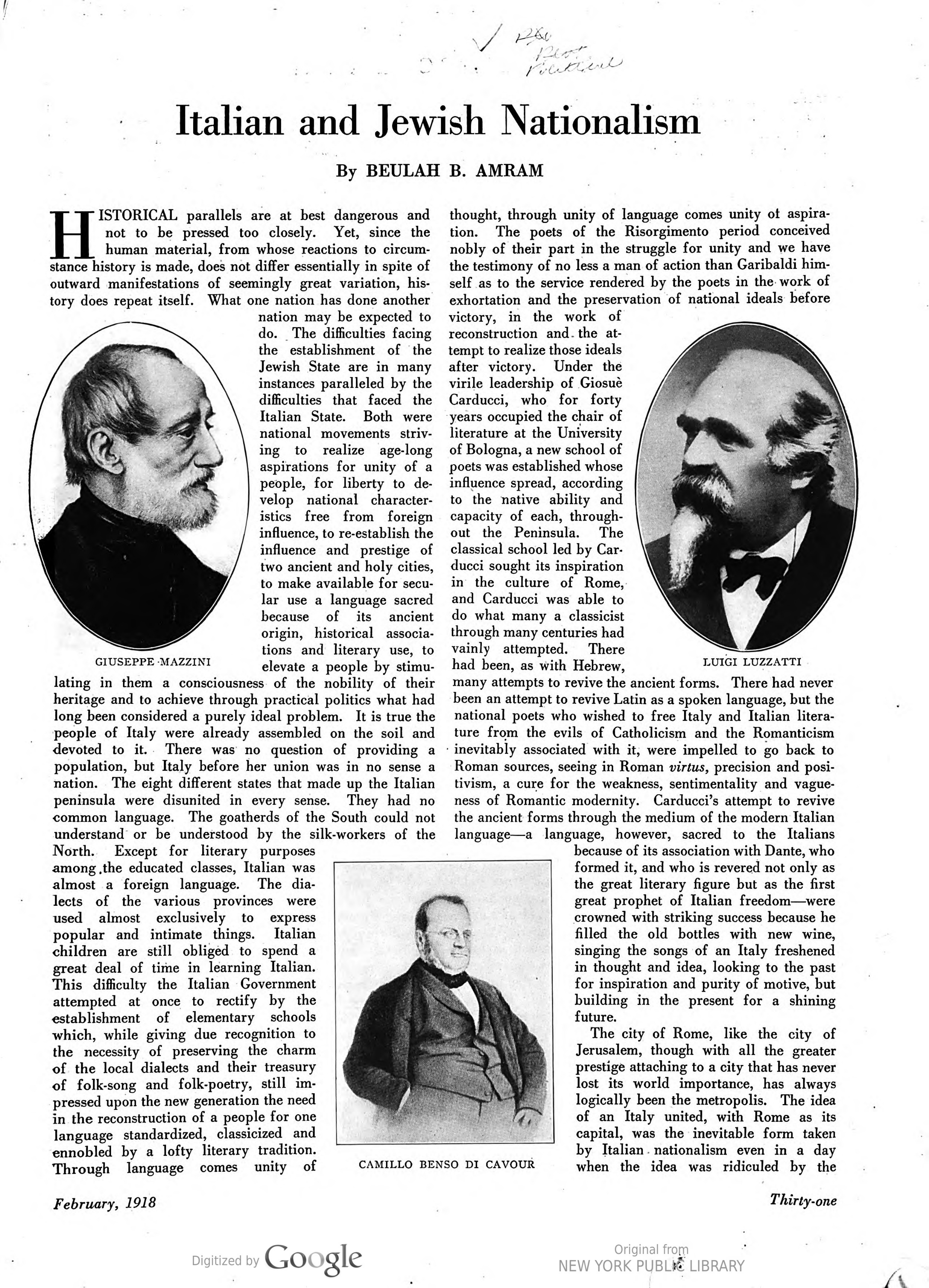
victory, in the work of reconstruction and. the attempt to realize those ideals after victory. Under the virile leadership of Giosué Carducci, who for forty years occupied the chair of literature at the University of Bologna, a new school of poets was established whose influence spread, according to the native ability and capacity of each, throughout the Peninsula. The classical school led by Carducci sought its inspiration in the culture of Rome, and Carducci was able to do what many a classicist through many centuries had vainly attempted. There had been. as with Hebrew.
many attempts to revive the ancient forms. There had never been an attempt to revive Latin as a spoken language, but the national poets who wished to free Italy and Italian literature from the evils of Catholicism and the Romanticism ‘inevitably associated with it, were impelled to go back to Roman sources, seeing in Roman virtus, precision and posi- tivism, a cure for the weakness, sentimentality and vagueness of Romantic modernity. Carducci’s attempt to revive the ancient forms through the medium of the modern Italian language—a language, however, sacred to the Italians
because of its association with Dante, who formed it, and who is revered not only as the great literary figure but as the first great prophet of Italian freedom—were crowned with striking success because he filled the old bottles with new wine, singing the songs of an Italy freshened in thought and idea, looking to the past for inspiration and purity of motive, but building in the present for a shining future.
The city of Rome, like the city of Jerusalem, though with all the greater prestige attaching to a city that has never lost its world importance, has always logically been the metropolis. The idea of an Italy united, with Rome as its capital, was the inevitable form taken by Italian. nationalism even in a day when the idea was ridiculed by the