Palestine as I Saw It
WE were less than three weeks in the land of our ancestors, and I am quite prepared to admit the justification for the taunt made me in Jerusalem the first evening I was there: "Have you seen enough to write a book of your Palestinian impressions?"
Yet there is an answer that is in a measure adequate, and that justifies more than a momentary review of our quickly gathered impressions. We had years of study behind us, and may we not add that we had the land of Palestine so fixed in our minds that from the moment we reached the Rafa frontier we knew our way in Zion. We knew the land and its story, in a great measure we knew the people and their story, and lastly by making an American record for speedy travel we were enabled to do what few have done before us: We saw Palestine, land and people as a whole—as one sees a great mass demonstration—city and crowd gathering at one time, a complete picture of place, people and purpose.
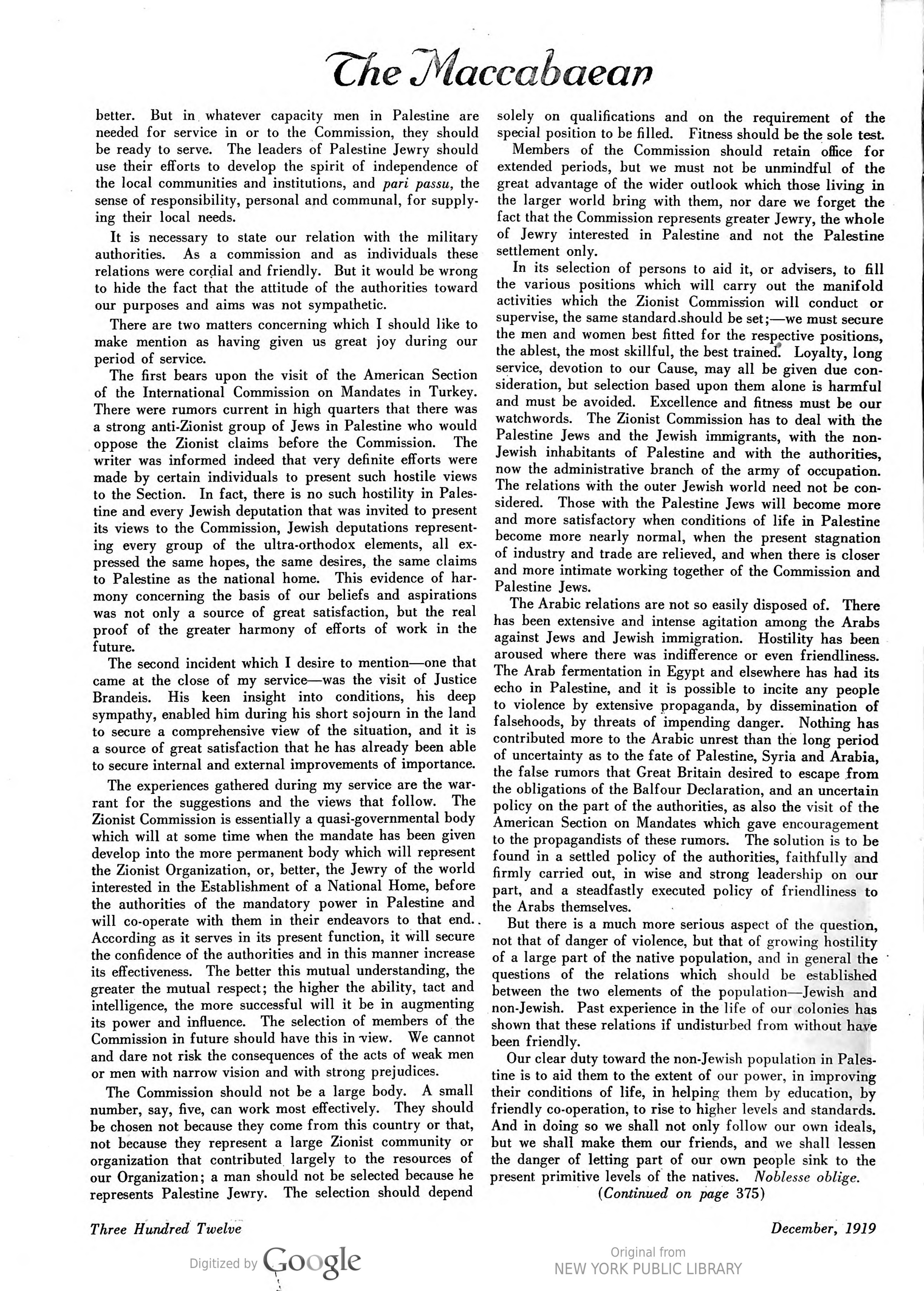
We visited twenty-three colonies and all the important towns west of the Jordan excepting Jericho, Beersheba and Gaza. And let me say at the outset of these lines to all those "who have eyes to see with" and who can manage it, go and see Palestine before the Zionists, as they must, change the wonderful picture that now exists. For to-day Palestine can be seen. Owing to its treeless condition all of it can be viewed from three high points, like a monstrous relief map Photographed by Mr. de Haas CAVALCADE OF SHOMERIN F MR. BRANDEIS ENT —towns, villages, sea, lakes,
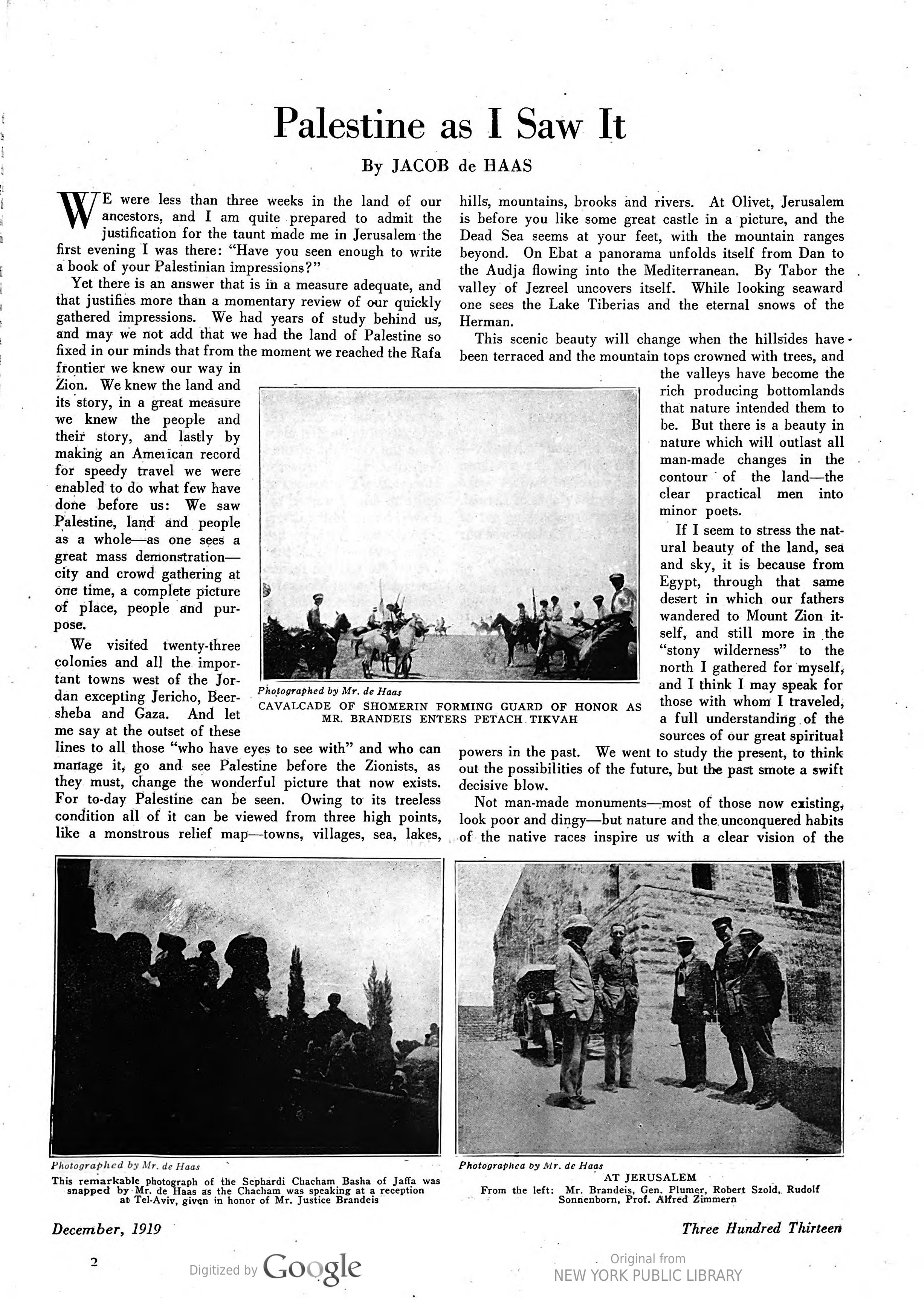
This remarkable photograph of the Sephardi Chacham Basha of Jaffa was snapped by Mr. de Haas as the Chacham was speaking at a reception at Tel-Aviv, given in honor of Mr. Justice Brandeis
hills, mountains, brooks and rivers. At Olivet, Jerusalem is before you like some great castle in a picture, and the Dead Sea seems at your feet, with the mountain ranges beyond. On Ebat a panorama unfolds itself from Dan to the Audja flowing into the Mediterranean. By Tabor the valley of Jezreel uncovers itself. While looking seaward one sees the Lake Tiberias and the eternal snows of the Herman.
This scenic beauty will change when the hillsides have been terraced and the mountain tops crowned with trees, and the valleys have become the rich producing bottomlands that nature intended them to be. But there is a beauty in nature which will outlast all man-made changes in the contour of the land—the clear practical men into minor poets.
If I seem to stress the natural beauty of the land, sea and sky, it is because from Egypt, through that same desert in which our fathers wandered to Mount Zion itself, and still more in the "stony wilderness" to the north I gathered for myself, and I think I may speak for those with whom I traveled, a full understanding of the sources of our great spiritual
powers in the past. We went to study the present, to think out the possibilities of the future, but the past smote a swift decisive blow.
Not man-made monuments—most of those now existing, look poor and dingy—but nature and the unconquered habits of the native races inspire us with a clear vision of the
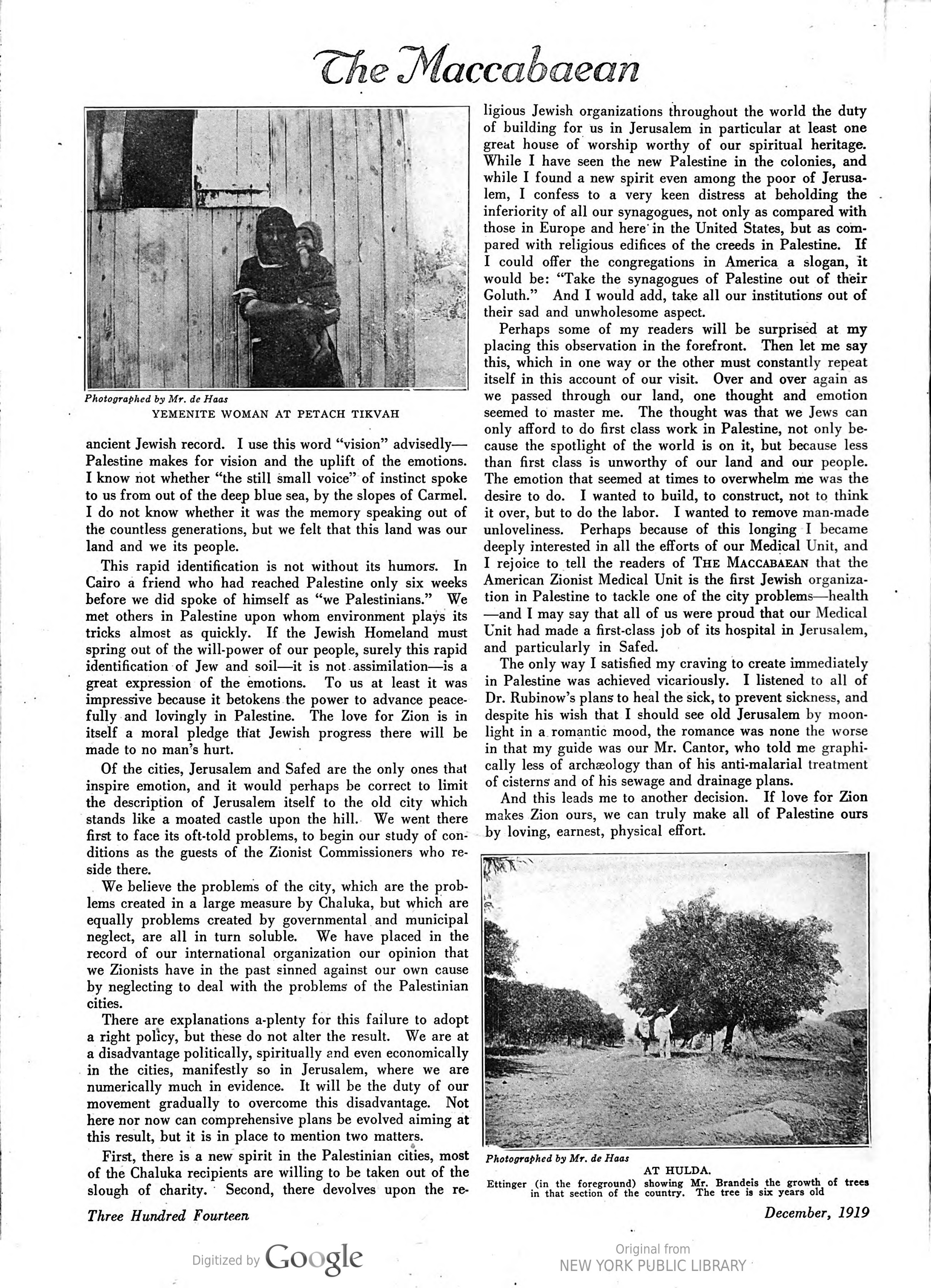
AT JERUSALEMFrom the left: Mr. Brandeis, Gen. Plumer, Robert Szold, Rudolf Sonnenborn, Prof. Alfred Zimmern