The Maccabaean
VOL. 33
The Jewish People and the League of Nations
THE next item on the Syllabus of the Peace Conference, after the settling of the Hungarian affair, will be the treaty with Turkey. Part of the arrangement will be the conferring on England of the mandate for the administration of Palestine, till this former province of the Ottoman Empire shall be judged capable of autonomy and efficient self-government.
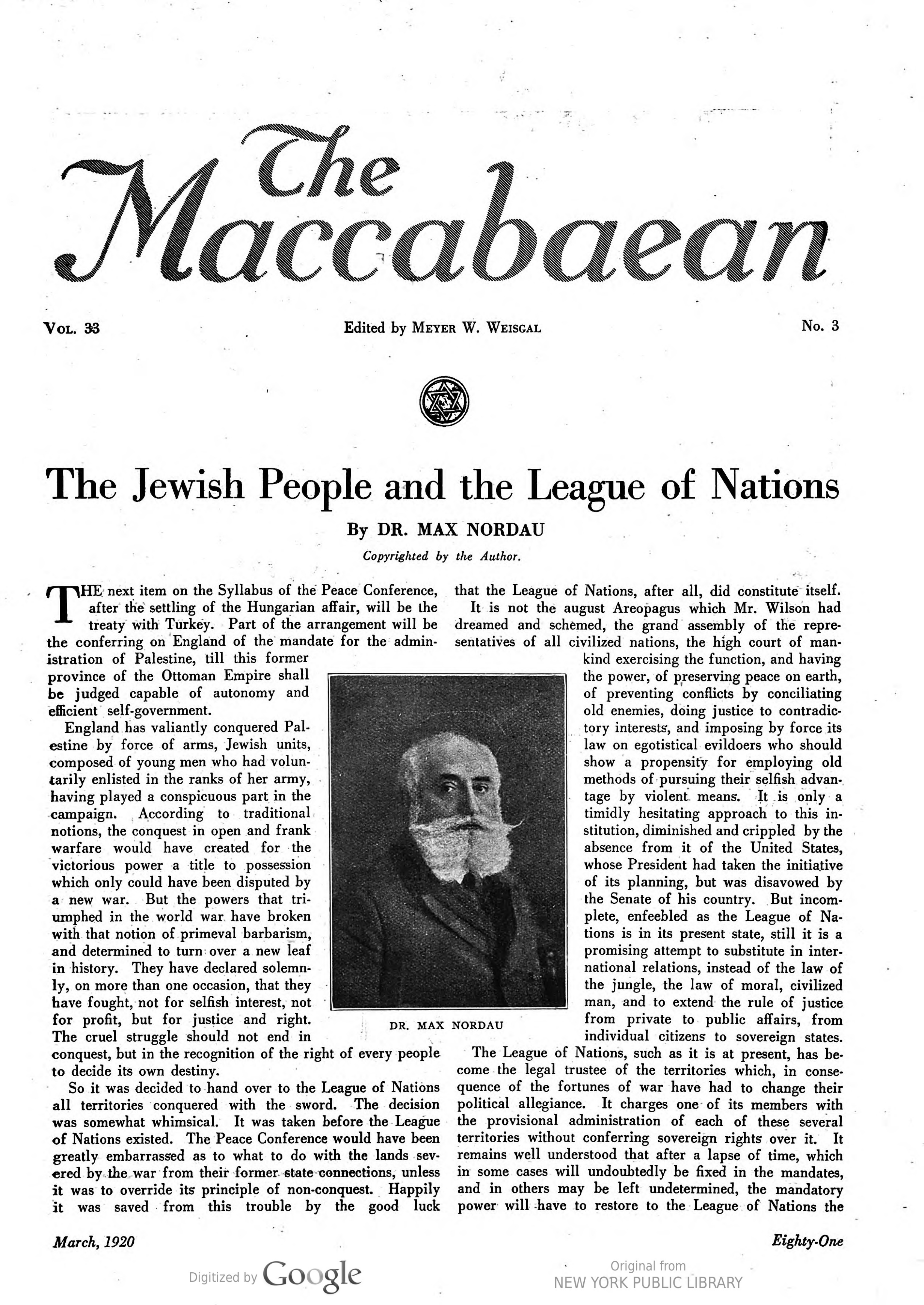
England has valiantly conquered Palestine by force of arms, Jewish units, composed of young men who had voluntarily enlisted in the ranks of her army, having played a conspicuous part in the campaign. According to traditional notions, the conquest in open and frank warfare would have created for the victorious power a title to possession which only could have been disputed by a new war. But the powers that tri- umphed in the world war have broken with that notion of primeval barbarism, and determined to turn over a new leaf in history. They have declared solemnly, on more than one occasion, that they have fought, not for selfish interest, not for profit, but for justice and right. DR. MAX The cruel struggle should not end in conquest, but in the recognition of the right of every people to decide its own destiny.
So it was decided to hand over to the League of Nations all territories conquered with the sword. The decision was somewhat whimsical. It was taken before the League of Nations existed. The Peace Conference would have been greatly embarrassed as to what to do with the lands severed by the war from their former state connections, unless it was to override its principle of non-conquest. Happily it was saved from this trouble by the good luck
that the League of Nations, after all, did constitute itself.
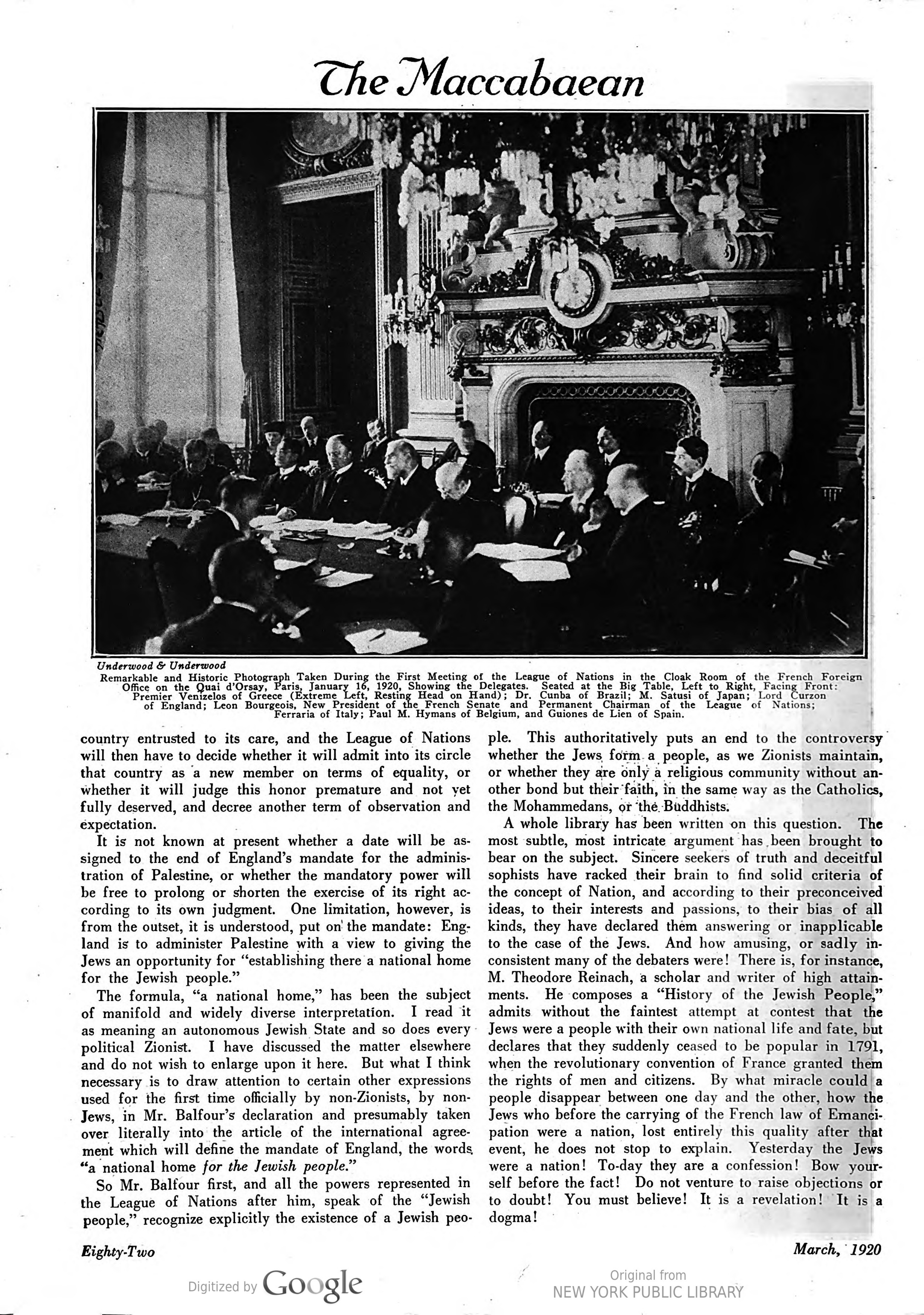
It is not the august Areopagus which Mr. Wilson had dreamed and schemed, the grand assembly of the representatives of all civilized nations, the high court of mankind exercising the function, and having the power, of preserving peace on earth, of preventing conflicts by conciliating old enemies, doing justice to contradictory interests, and imposing by force its law on egotistical evildoers who should show a propensity for employing old methods of pursuing their selfish advantage by violent means. It is only a timidly hesitating approach to this institution, diminished and crippled by the absence from it of the United States, whose President had taken the initiative of its planning, but was disavowed by the Senate of his country. But incomplete, enfeebled as the League of Nations is in its present state, still it is a promising attempt to substitute in international relations, instead of the law of the jungle, the law of moral, civilized man, and to extend the rule of justice from private to public affairs, from individual citizens to sovereign states.
The League of Nations, such as it is at present, has become the legal trustee of the territories which, in consequence of the fortunes of war have had to change their political allegiance. It charges one of its members with the provisional administration of each of these several territories without conferring sovereign rights over it. It remains well understood that after a lapse of time, which in some cases will undoubtedly be fixed in the mandates, and in others may be left undetermined, the mandatory power will have to restore to the League of Nations the